Aging-in-Place Technology: Why Insurers Pay for It Now
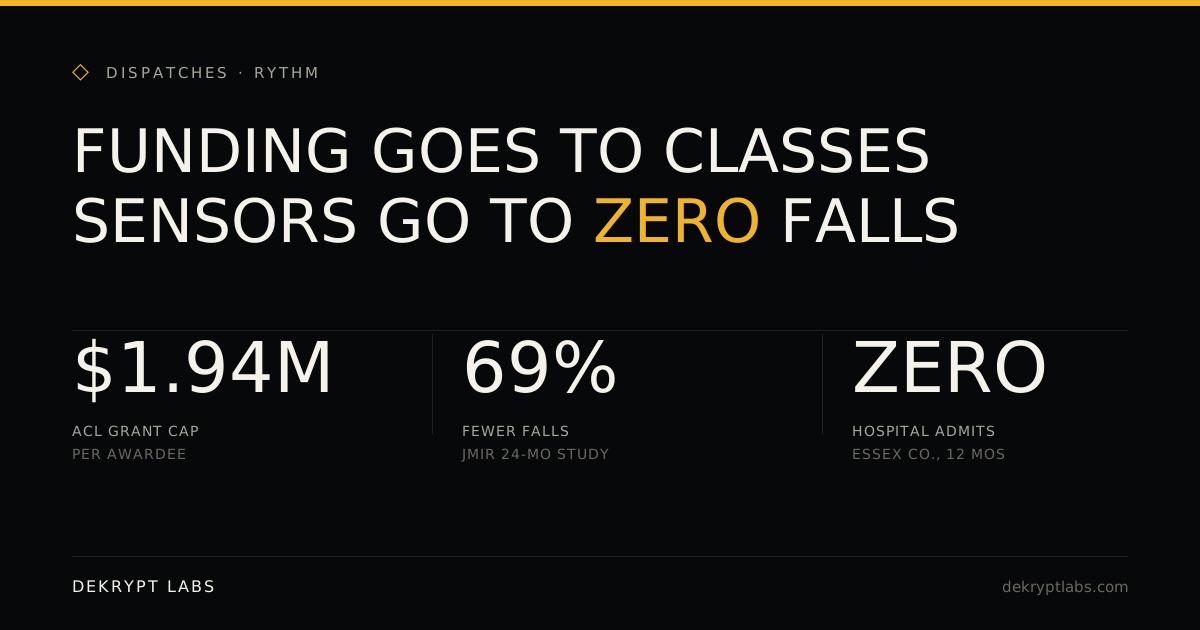
On July 27, the U.S. government closes applications for $1,940,162 in three-year grants meant to reduce falls among older adults. Almost none of that money can buy the sensors already cutting fall-related hospital admissions to zero in the field. That gap — funding versus evidence — is the real story in aging-in-place technology this year, not the sensors themselves.
The short version
- ACL's Center for Innovation and Partnership is offering up to $1,940,162 per awardee (notice HHS-2026-ACL-CIP-AAFP-0017, posted June 26, 2026) to scale falls-prevention programs — Stepping On, STEADI — across five regions. Applications close July 27, 2026.
- A 2020 JMIR Aging study of 490 residents across six assisted living communities found a 69% lower fall rate and 39% lower hospitalization rate in communities using CarePredict's wearable-based monitoring, versus matched controls.
- Essex County Council installed 316 Vayyar Care radar sensors — 138 at the 69-bed Foxburrow Grange home alone — and recorded zero fall-related hospital admissions and zero "long lies" in the first 12 months.
- The global fall detection systems market is forecast to grow from $531.7 million in 2026 to $728.4 million by 2033, per Grand View Research.
- The Joint Commission will fold the National Quality Forum's serious-reportable-events list into its sentinel event policy on January 1, 2027, tightening how falls get reported and compared across accredited facilities.
Two pots of money are chasing the same problem
Federal falls-prevention funding and senior-care operating budgets are solving for the same outcome — fewer falls — but they don't talk to each other. ACL's grant money funds classroom programs and community coalitions: train an instructor, run a Stepping On cohort, report attendance. It is real money, and it works at the population level.
The operating money — the budget a senior living operator or a family actually controls — is increasingly going somewhere else: ambient sensors. Essex County Council didn't apply for a federal training grant to get to zero long lies. It bought hardware.
Does federal falls-prevention funding pay for sensor technology?
Mostly no. ACL's three open 2026 notices (HHS-2026-ACL-CIP-AAFP-0017 and two AOA notices, HHS-2026-ACL-AOA-FPSG-0004/0005) fund evidence-based programs — Stepping On, STEADI, technical-assistance centers — not hardware procurement. Capital budgets, insurers, and family spending are what's actually funding sensor deployments.
That split matters because the evidence for the two approaches isn't equal. Programs reduce falls at a population level over years. The Essex and CarePredict numbers above came from hardware, deployed and measured in months, not grant cycles.
The sensor evidence is already ahead of the funding
Here's what's actually been measured, not projected:
| Approach | Deployment | Measured result | Compliance required |
|---|---|---|---|
| Wearable + AI platform (CarePredict) | 6 communities, 490 residents, 24 months | 69% lower fall rate, 39% lower hospitalizations | Resident wears the clip |
| Contactless radar (Vayyar Care) | 316 sensors, Essex County Council | Zero fall hospital admissions, zero long lies in year 1 | None — sensor is passive |
| ACL grant programs (Stepping On, STEADI) | 5 regions, 3-year rollout starting 2026 | Population-level, multi-year outcomes | Attendance-based |
Even the wearable approach — which still depends on a resident keeping a clip on — posted a 69% fall reduction. The contactless deployments removed the compliance requirement entirely and still eliminated the worst outcome: the long lie, the hours nobody knows a fall happened.
Insurers are pricing this before regulators finish catching up
Commercial general liability carriers underwriting senior living now ask specific questions about what fall-prevention technology is deployed, not whether a policy exists on paper. The Joint Commission's move to align its sentinel event list with the NQF's serious-reportable-events list, effective January 1, 2027, will make falls-with-major-injury easier to compare across facilities — which means harder to hide in a footnote during an insurance renewal.
That regulatory tightening is why operators aren't waiting for the next ACL grant cycle. A facility that can show zero long lies for 12 months, the way Foxburrow Grange did, has a number to hand its underwriter. A facility running only a training program has an attendance sheet.
None of this is really about hardware versus programs — it's about what's contactless. Every deployment above still relies on a resident wearing something or staff running a session. Rythm's bet is that the next reduction in the "long lie" number comes from sensing that requires zero participation from the person being protected: Wi-Fi CSI and mmWave radar that watch for a fall or a breathing anomaly without a camera, a clip, or a class to attend.
The $1,940,162 grant will fund good programs, and Stepping On and STEADI have real evidence behind them over long horizons. But the fastest-moving numbers this year — zero long lies in 12 months, a 69% fall-rate drop in 24 months — came from hardware that insurers, not federal program officers, are the ones actually paying attention to. Anyone planning aging-in-place technology spend for a parent or a facility in 2026 should ask which pot of money they're actually drawing from, and whether it matches the outcome they're trying to buy.
Frequently Asked Questions
What is aging-in-place technology? Aging-in-place technology is any device or system that helps older adults live safely and independently at home rather than moving to a care facility — including fall detection sensors, medication reminders, contactless health monitoring, and emergency alert systems.
Does Medicare or a federal grant pay for fall-detection sensors? Generally no. ACL's 2026 falls-prevention notices (HHS-2026-ACL-CIP-AAFP-0017, HHS-2026-ACL-AOA-FPSG-0004/0005) fund evidence-based training programs like Stepping On and STEADI, not sensor hardware purchases, which are typically paid for by facility operating budgets, insurers, or families directly.
What is a "long lie" and why does it matter more than the fall itself? A long lie is the period an older person spends on the floor, undiscovered, after a fall. Extended long lies are linked to dehydration, pressure injuries, and higher six-month mortality — which is why eliminating long lies, not just detecting falls, is the outcome operators and insurers now measure.
How is contactless fall detection different from a wearable or camera? Contactless systems use Wi-Fi channel state information or mmWave radar to sense motion, breathing, and falls without requiring a resident to wear a device or press a button, and without recording video images — removing the compliance and privacy problems both older approaches carry.
Abhishek Gupta is Co-Founder at Dekrypt Labs, building Rythm — contactless cardiac and safety sensing for elderly people living alone. dekryptlabs.com