AI Consulting Disruption: When McKinsey Automates Itself
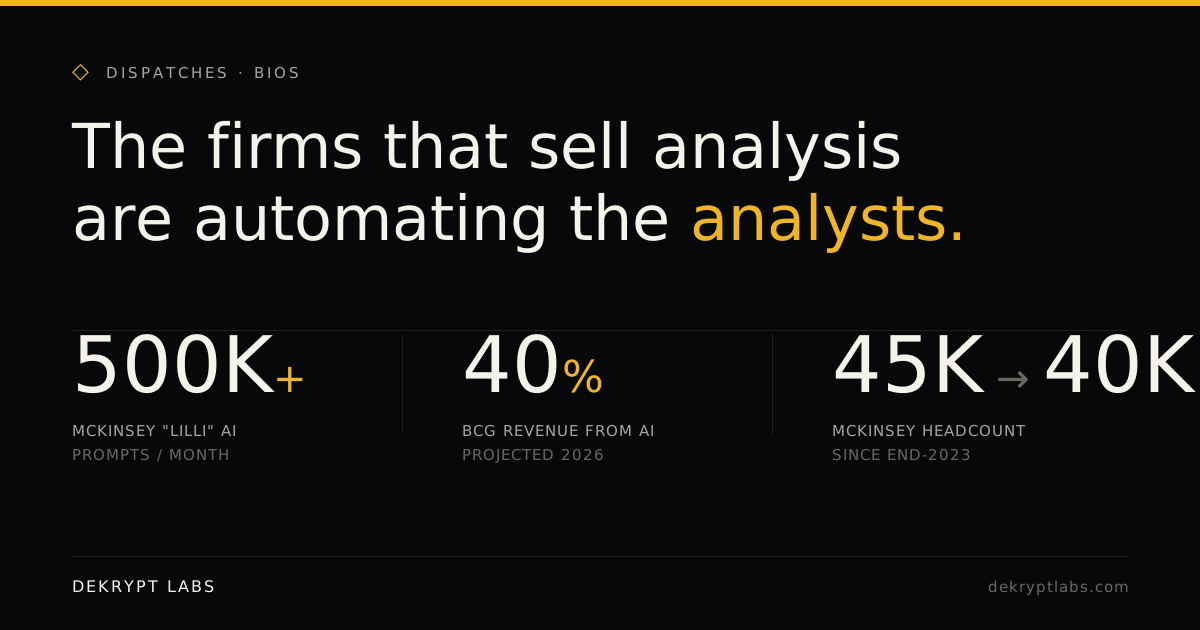
McKinsey's own AI assistant now answers more than 500,000 prompts a month — inside the firm. In the same stretch, its headcount fell from roughly 45,000 to about 40,000, the largest contraction in its 100-year history.
The firms that sell you analysis are quietly automating the analysts. That is the real AI consulting disruption, and it is not the story you have been told.
The short version
- McKinsey's internal AI, Lilli, handles 500,000+ prompts a month; partners now describe a "workforce" of roughly 40,000 people plus tens of thousands of AI agents.
- McKinsey's headcount is down about 10% (≈45,000 → ≈40,000 since end-2023) — its steepest drop ever.
- BCG expects AI-related work to climb from ~20% of 2024 revenue to ~40% in 2026; Bain projects its tech- and AI-enabled share rising from ~30% toward 50%.
- The disruption isn't aimed at junior consultants first. It's aimed at the price of business intelligence itself.
- When the marginal cost of an answer collapses, the ₹40 lakh strategy deck has a pricing problem.
What is "AI consulting disruption" actually disrupting?
AI consulting disruption is the collapse in the cost of producing business analysis — market sizing, competitor breakdowns, diligence — as AI agents do in minutes what analyst teams once billed across weeks. The first casualty is not the consultant's job. It's the fee those hours justified.
Lilli, McKinsey's generative-AI platform, went firm-wide in July 2023, trained on a century of the firm's proprietary material. By 2026 it fields over 500,000 prompts a month. The synthesis, the first-draft deck, the literature scan — that work is now machine work.
Read the headcount number next to the prompt number and the picture sharpens. McKinsey's staff fell about 10% since 2023, the biggest headcount loss in its history. The firm attributes the drop to attrition and performance management, not layoffs. Either way, the same revenue no longer needs the same pyramid.
The numbers the big three are reporting themselves
These aren't critics' estimates. They're the firms' own figures, in investor updates and partner remarks.
| Firm | AI-related revenue | Internal AI signal |
|---|---|---|
| BCG | ~20% (2024) → ~40% (2026) | AI work scaling across a ~$12B firm |
| Bain | ~30% now → ~50% projected | Tech/AI-enabled delivery |
| McKinsey | Not broken out | Lilli: 500,000+ prompts/month |
When BCG tells investors AI will be 40% of revenue, it is also telling you that 40% of the work is moving off the billable-hour model. That is why all three are testing outcome-based and fixed-fee pricing — the hour is no longer a clean unit of value when software does the hour's work.
Why this matters more in India than in New York
Most Indian businesses never had McKinsey access. A top-tier engagement starts around ₹40 lakh and runs into crores — a price that put structured strategy work out of reach for the more than 63 million MSMEs and mid-market firms that make up the economy.
The shift that unsettles partners is an opening for everyone who was priced out. If the intelligence behind a recommendation is increasingly produced by software, it can be priced like software — a subscription, not a partner's day rate. The question for an owner stops being "can I afford McKinsey?" and becomes "what specific decision do I need answered this week?"
So who captures the value AI frees up?
Not the firm that defends the hour. The one that productizes the answer.
That is the bet behind BIOS: a Business Intelligence Operating System where a plain-English question — who are my three fastest-growing competitors, and where are they winning? — returns a verified, confidence-scored report, with sources, at software pricing. The deck was never the value. The judgment behind it was. AI is finally forcing those two apart and pricing each honestly. You can see the kind of questions that look like on our dispatches and research pages.
The classic case interview is reportedly dying inside these firms, replaced in part by AI-assisted screens. That's a tell. When the people who built the analyst pyramid start hiring for a different skill, the pyramid is already coming down — and the cost of a good business answer is coming down with it.
Frequently Asked Questions
Is AI really disrupting management consulting? Yes. McKinsey's internal AI, Lilli, handles over 500,000 prompts a month, and its headcount has fallen about 10% since 2023. BCG expects AI-related work to reach roughly 40% of revenue in 2026. The economics of billing analyst hours are changing quickly across the big three.
What is the best McKinsey alternative for a smaller business? For most companies the realistic alternative is no longer a boutique consultancy but an AI business intelligence platform that answers specific questions — market size, competitor moves, entry strategy — at software prices. You trade a bespoke engagement for structured, verifiable answers you can get this week.
Will AI replace consultants entirely? No. AI absorbs the synthesis and first-draft work that filled analyst weeks. Judgment, client relationships, and accountability for a recommendation still need people. The role shrinks toward the parts that genuinely require a human, and the price of everything else falls.
How much does strategy consulting cost in India? Engagements from top firms typically start around ₹40 lakh and run into crores, which is why most Indian SMBs never used them. That price floor is exactly what AI-produced business intelligence undercuts.
Abhishek Gupta is Co-Founder at Dekrypt Labs, building BIOS — a Business Intelligence Operating System for Indian businesses. dekryptlabs.com