RBI's NBFC Revolving Credit Ban: What Changes by Aug 28
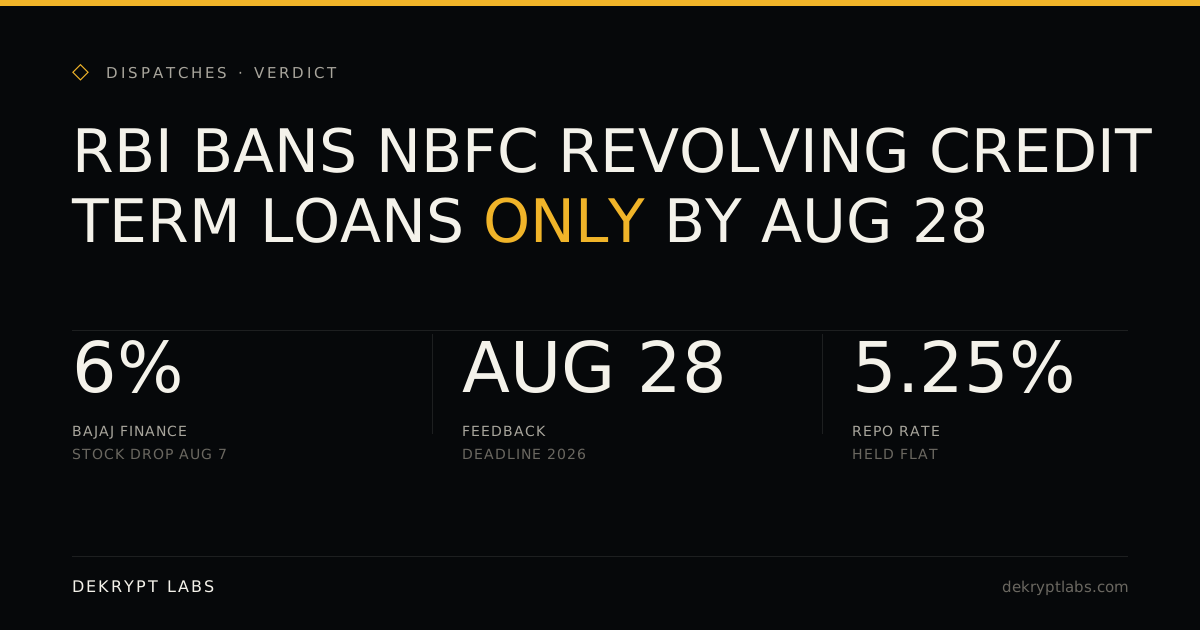
On August 6, the RBI proposed a rule that kills the product category several NBFCs built their growth story on: revolving credit. Under the draft amendment, every NBFC without a credit-card licence would be limited to term loans — fixed amount, fixed schedule, no redraw. Bajaj Finance's stock fell 6% the next trading day.
The short version
- RBI's draft amendment to the NBFC Directions, 2025 restricts most NBFCs to term-loan products only; revolving and flexi-credit lines are barred except for NBFCs holding a credit-card authorisation.
- The stated goal is curbing "evergreening" — borrowers rolling over old debt with fresh drawdowns instead of repaying from real cash flow.
- A term loan under the draft: fixed principal, disbursed lump sum or in tranches, repaid on a set schedule, and the sanctioned limit cannot be restored once repaid.
- NBFC stocks dropped the day after the announcement — Bajaj Finance, the sector's largest flexi-credit lender, fell 6% on August 7.
- Feedback closes August 28, 2026. If notified as drafted, the rule takes effect on publication — there's no multi-quarter transition window built in.
What exactly does the RBI's draft ban?
Any fund-based facility that lets a borrower repeatedly draw down, repay, and redraw the same sanctioned limit without a fresh application — the flexi-loan, credit-line, or overdraft-style product many NBFCs sell to MSMEs and retail borrowers. Term loans, which disburse once against a fixed repayment schedule, are untouched.
The draft does the job through definitions, not a blanket prohibition. It deletes the existing revolving-credit carve-out in Chapter II of the 2025 Directions, removes the separate chapter on demand and call loans, and inserts a new section titled "Restrictions on Revolving Credit Facilities." NBFCs specifically authorised by the RBI to issue credit cards keep the right to offer revolving lines through their card business — everyone else has to choose: restructure the product as a term loan, or stop offering it.
Why now — what does "evergreening" have to do with it?
Regulators worry that revolving lines let a stressed borrower redraw the same limit to stay current on paper, without the underlying cash flow to support it — quietly delaying NPA classification instead of fixing it. That masks real asset quality until the line finally breaks.
This isn't a new worry. The RBI flagged the same risk in an earlier advisory warning NBFCs to move perpetual credit lines toward fixed repayment structures. The August 6 draft turns that advisory into an enforceable rule, with a hard definition of what counts as a term loan and what doesn't.
Who actually gets hurt?
| Exempted | Directly affected | |
|---|---|---|
| Who | NBFCs authorised to issue credit cards | NBFCs running flexi-credit / credit-line products for MSMEs and retail |
| Can still offer | Revolving credit via card business | Term loans only |
| Example impact | No structural change | Rework product terms or exit the line entirely |
Jugal Mantri, ED and CEO of Anand Rathi Global Finance, called the draft "a significant regulatory shift for the NBFC sector," adding that the impact is "likely to be largely dampening for borrowers" and could "affect business models built around flexible, easily accessible credit-line products." The market agreed before the ink was dry — NBFC stocks tumbled on August 7, with Bajaj Finance, which carries meaningful flexi-credit exposure, down 6% in a single session.
Notably, this lands in the same week the RBI's Monetary Policy Committee held the repo rate flat at 5.25%. Cost of funds stayed put; it's the product shelf that's being redrawn.
What should NBFC lenders do before August 28?
Submit feedback on the draft — the window is open and RBI has historically revised scope after comment periods. More urgently: any credit committee that approved a flexi-credit product in the last two years needs a line-by-line read of whether that product survives the new term-loan definition, and a fallback structure ready before the rule is notified.
That's precisely the seam where a structured underwriting proposal earns its keep. When a regulatory redefinition can invalidate part of a loan book overnight, the diligence memo can't lag the rule change by a quarter — it has to flag the exposure the day the draft drops, not after the notification.
For more on how regulatory shifts move through Indian lending, see our dispatches archive and the underlying research we pull from.
Frequently Asked Questions
What is the RBI's draft ban on NBFC revolving credit? A proposed amendment to the NBFC Directions, 2025 that limits most NBFCs to term-loan products only, barring revolving credit facilities like flexi-loans and credit lines, except for NBFCs authorised to issue credit cards. Feedback closes August 28, 2026.
Which NBFCs are exempt from the RBI's revolving credit restrictions? Only NBFCs that hold specific RBI authorisation to issue credit cards are exempt, and only for revolving credit offered through their card business. Every other NBFC offering flexi-credit or credit-line products would need to restructure or stop.
Why is the RBI restricting revolving credit for NBFCs? To curb "evergreening" — where borrowers redraw the same sanctioned credit line to stay current on paper instead of repaying from genuine cash flow, which delays accurate NPA classification and masks real asset quality on NBFC books.
How did NBFC stocks react to the RBI's draft norms? NBFC shares fell on August 7, 2026, a day after the draft was published. Bajaj Finance, which has meaningful flexi-credit exposure, dropped 6% in a single session as analysts flagged slower customer acquisition and compressed yields.
Abhishek Gupta is Co-Founder at Dekrypt Labs, building Verdict — AI-assisted underwriting and investment proposals. dekryptlabs.com