Synthetic Respondents Are the Wrong AI Bet
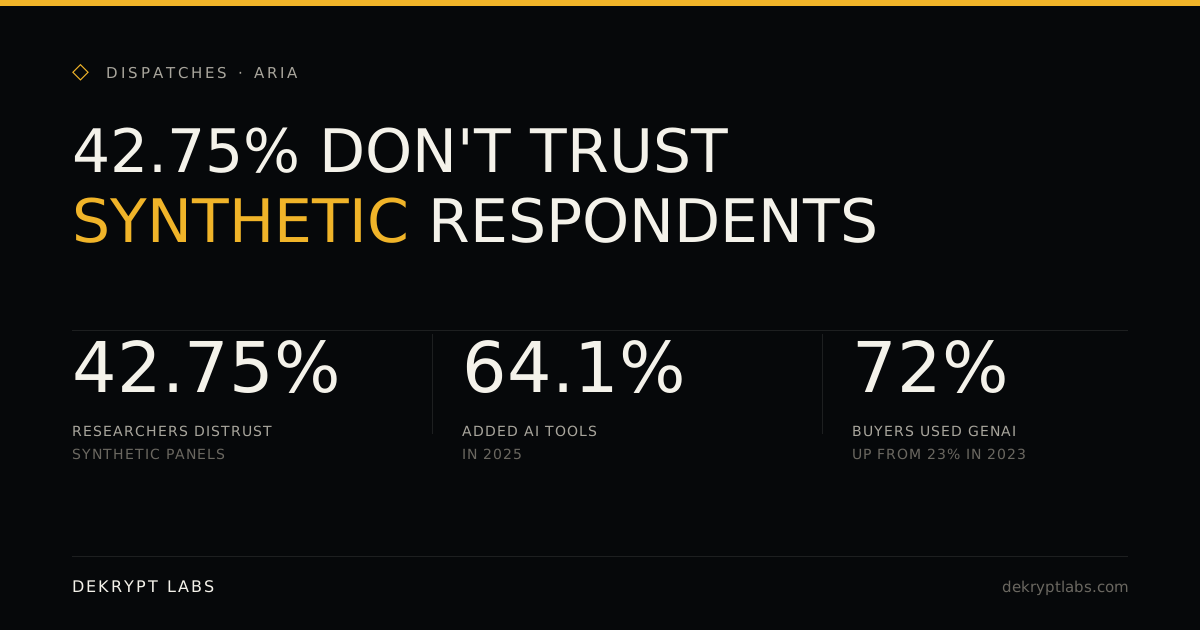
42.75% of market researchers don't trust an AI-generated respondent. That's the actual headline buried inside two industry reports everyone's citing this year, while the conversation stays fixated on whether synthetic panels will replace human ones.
They won't — not yet, not by the researchers' own admission. The real AI adoption story in insights is happening somewhere far less glamorous: the pipeline behind the panel.
The short version
- 64.1% of researchers increased the number of AI tools they use in 2025, per Rival Group's Market Research Trends 2026 report.
- 42.75% of researchers say synthetic respondents are a supplement, not a substitute — the least-trusted AI use case in the field, per the same report.
- Greenbook's 16th GRIT Insights Practice Report (June 2026) finds agentic AI is embedded in exactly three tasks: analyzing data, updating reports, and preparing/integrating data.
- 72% of insights buyers used generative AI in at least one stage of a research project in 2025 — up from 23% in 2023, per Greenbook's GRIT data.
- Conversational research formats produce responses 2.5x longer than standard surveys, and up to 8x longer with video and AI-enhanced probes.
Is AI replacing survey respondents in market research?
No. Rival Group's 2026 trends report — pulled from its Rival Technologies and Reach3 Insights operating companies, both on Greenbook's 2025 GRIT Top 10 Most Innovative Suppliers list — found 42.75% of researchers view synthetic respondents as supplementary at best. Real humans still anchor the panel.
That skepticism isn't researchers being slow. It's the opposite. The same cohort is adopting AI faster than almost any other function measured: 64.1% added tools in 2025, and 46.2% expect to expand AI budgets again this year. They're not AI-averse. They're specifically averse to letting AI stand in for the human being answering the question.
Where is agentic AI actually earning trust in insights teams?
Three tasks, according to Greenbook's 16th GRIT Insights Practice Report, released in June 2026: analyzing data, updating reports, and preparing and integrating data. Nothing about generating respondents. Nothing about writing the survey narrative from scratch, unsupervised.
| Where AI sits in the research workflow | Adoption | Researcher trust |
|---|---|---|
| Data analysis & pattern detection | Embedded, everyday use | High |
| Report updates & formatting | Embedded, everyday use | High |
| Data prep & integration | Embedded, everyday use | High |
| Synthetic respondents | Pilot / supplementary | Low (42.75% skeptical) |
The pattern is consistent: AI wins trust where it compresses grunt work — structuring, formatting, cross-referencing — and stays on probation anywhere it touches the actual signal the client is paying for.
Why the governance gap matters more than the synthetic-panel debate
GRIT's June 2026 data surfaces a second, less-discussed number: the teams driving AI adoption fastest inside insights organizations are also the least confident that AI risk is being managed well. Adoption is outrunning governance, not the other way around.
That gap is what should worry a research buyer more than whether a chatbot can fake a focus group. An ungoverned reporting pipeline produces a bad deck. An ungoverned respondent pipeline produces a bad decision that looks statistically sound. Different failure classes, wildly different stakes — and right now the industry is investing energy in the smaller one.
What changed between 2023 and 2026?
Generative AI usage among insights buyers went from 23% to 72% of projects touching at least one AI stage — a threefold jump in two years, per Greenbook's GRIT tracking. That's the fastest-moving number in this whole picture, and it happened almost entirely inside the "boring" half of the workflow: data wrangling, not data generation.
Rival Group's numbers on conversational research point the same direction. Chat-style methodologies already produce 2.5x longer respondent answers than static surveys, climbing to 8x with video or AI-guided probes — richer human data, gathered faster, not replaced. The gains are compounding where AI assists the human respondent, not where it tries to become one.
This is the split we built ARIA around: automate the brief-to-deck grind — proposal drafting, questionnaire structuring, analysis, narrative assembly — and leave the actual human signal untouched. The 2026 data says that's where the trust already exists; nobody has to be persuaded synthetic respondents are fine to get the productivity win.
None of this means synthetic respondents are dead. 72.5% of researchers in Rival's survey still believe the industry's overall trajectory is positive for consumers, and pilots will keep running. But the 42.75% distrust number is a governance signal, not a technology ceiling — it says validate before you scale, not never touch it. For more on how AI research pipelines are actually being built in 2026, see our dispatches and the underlying research behind this piece.
The market research industry didn't get an AI mandate in 2026. It got a scoped one: automate the structure, keep the humans in the room that matters. Buyers who conflate the two — assuming reporting-automation trust transfers to respondent-generation trust — are the ones who'll get burned first.
Frequently Asked Questions
What percentage of researchers distrust synthetic respondents in 2026? 42.75% of researchers view synthetic respondents as a supplement rather than a replacement for human panels, according to Rival Group's Market Research Trends 2026 report, published via Rival Technologies and Reach3 Insights.
Which research tasks does agentic AI actually handle in 2026? Greenbook's 16th GRIT Insights Practice Report (June 2026) identifies three embedded agentic AI tasks in insights teams: analyzing data, updating reports, and preparing and integrating data — not respondent generation or unsupervised narrative writing.
How much has generative AI use grown among market research buyers? 72% of insights buyers used generative AI in at least one stage of a research project in 2025, up from 23% in 2023 — a threefold increase in two years, per Greenbook's GRIT data.
Do conversational research methods actually get better data than surveys? Yes. Conversational research formats produce responses 2.5 times longer than standard surveys on average, and up to 8 times longer when combined with video or AI-enhanced follow-up probes, per Rival Group's 2026 findings.
Abhishek Gupta is Co-Founder at Dekrypt Labs, building ARIA — an AI research pipeline from brief to deck. dekryptlabs.com